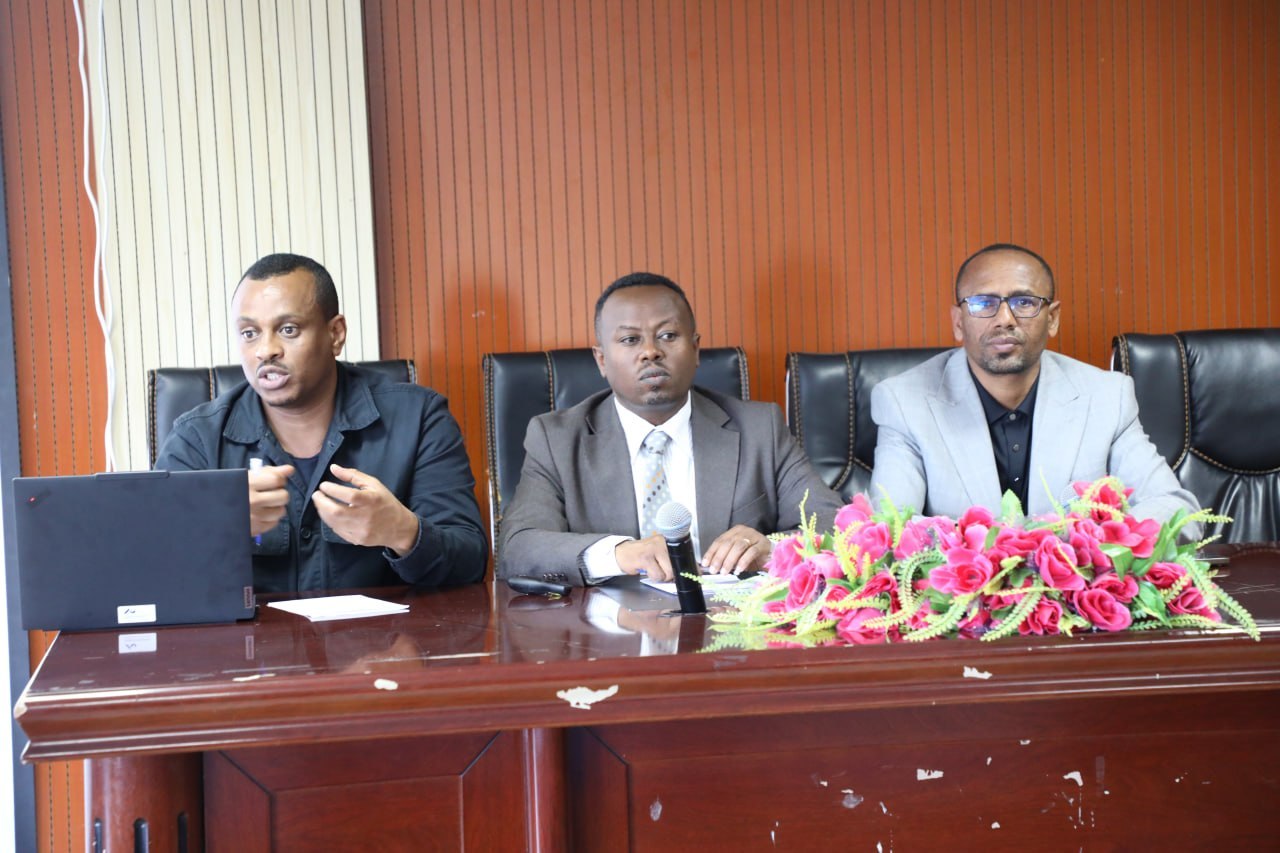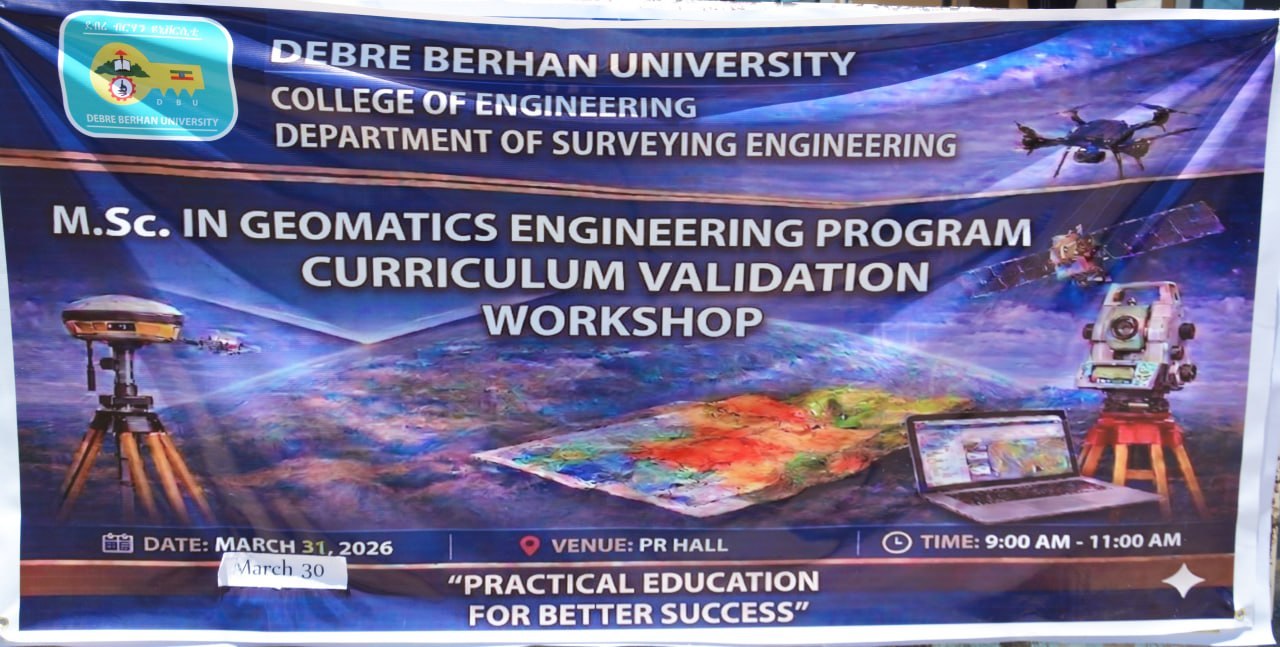
The review forum was attended by renowned scholars in the field, industry professionals, relevant stakeholders from the Debre Berhan City Administration, and other invited guests. The curriculum underwent an in-depth evaluation by two external and two internal evaluators.
Dr. Andinet Ashagrie, an
Associate Professor of Civil and Environmental Engineering at Addis Ababa
University, served as the primary external evaluator. During his detailed
analysis, he noted that the curriculum meets the rigorous standards required
for postgraduate students. And it incorporates the latest advancements in
Geomatics Engineering technology. Furthermore, the design ensures students are
not limited to theory but are equipped to solve complex engineering challenges
through research and practical application.
Dr. Andinet further emphasized that as DBU is
an Applied University, launching such postgraduate programs is crucial for
addressing the shortage of high-level professionals and driving technology
transfer and industrial development.
Tekletsadik Shiwerke, Dean of the
College of Engineering, explained during his opening remarks that the college
is focusing on high-priority fields supported by both internal and external
expert reviews. He highlighted the university's broader strategy: Multidisciplinary
Approach: Utilizing university resources to create diverse departments that
satisfy the national labor market. Future Expansion: The Dean revealed a
long-term vision to strengthen capacity and eventually launch Doctorate (PhD)
programs. Market Alignment: The curriculum was scrutinized to ensure it meets
international standards and the specific needs of the current job market.
According to the Dean, the
constructive feedback from the workshop will be integrated into the final
document, which will then be approved by the department and the University
Senate.
Once these processes are
finalized, Debre Berhan University plans to enroll its first batch of M.Sc. in
Geomatics Engineering students in the 2019 E.C. (2026/27 G.C.) academic year.
Beyond addressing professional
shortages, the program is expected to strengthen the university's ties with the
local community, city administrations, and employers through problem-solving
researcher.